A Permanently High Plateau
Peak complacency, or a new era, AI-boom ahead?
Summary
Q2 GDP came in at +1.5%, below consensus and slowing. The same morning, the Atlanta Fed opened Q3 at +5.0%. One confirmed weak quarter, one unconfirmed strong one. We argue that an inflationary boom is the more likely outcome for now, where equities outperform energy, gold outperforms US Treasuries, and gold tends to outperform equities over time. Inside, we discuss the market’s current technical picture, our latest views on precious metals, and why the real risk to US yields lies in Tokyo, not Washington.
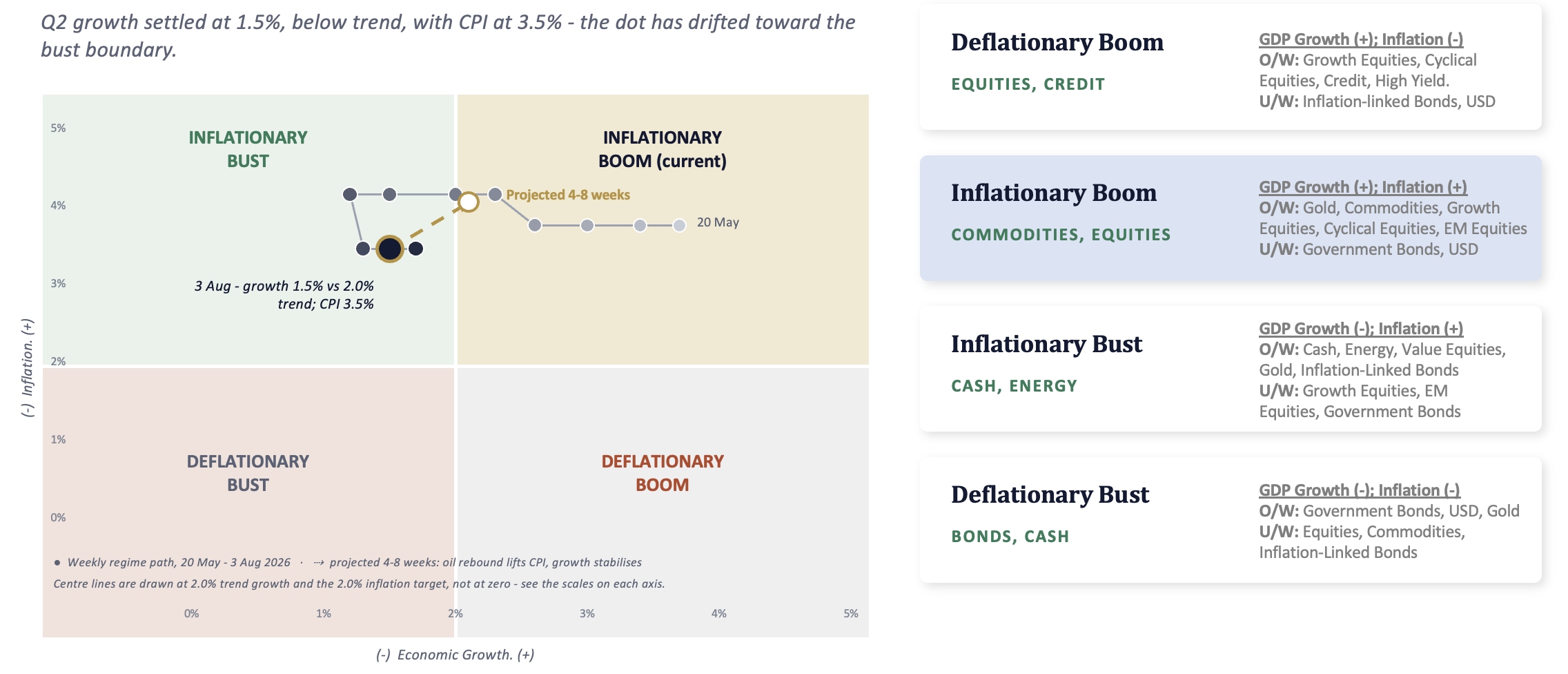
Quadrant / Regime - Inflationary Boom
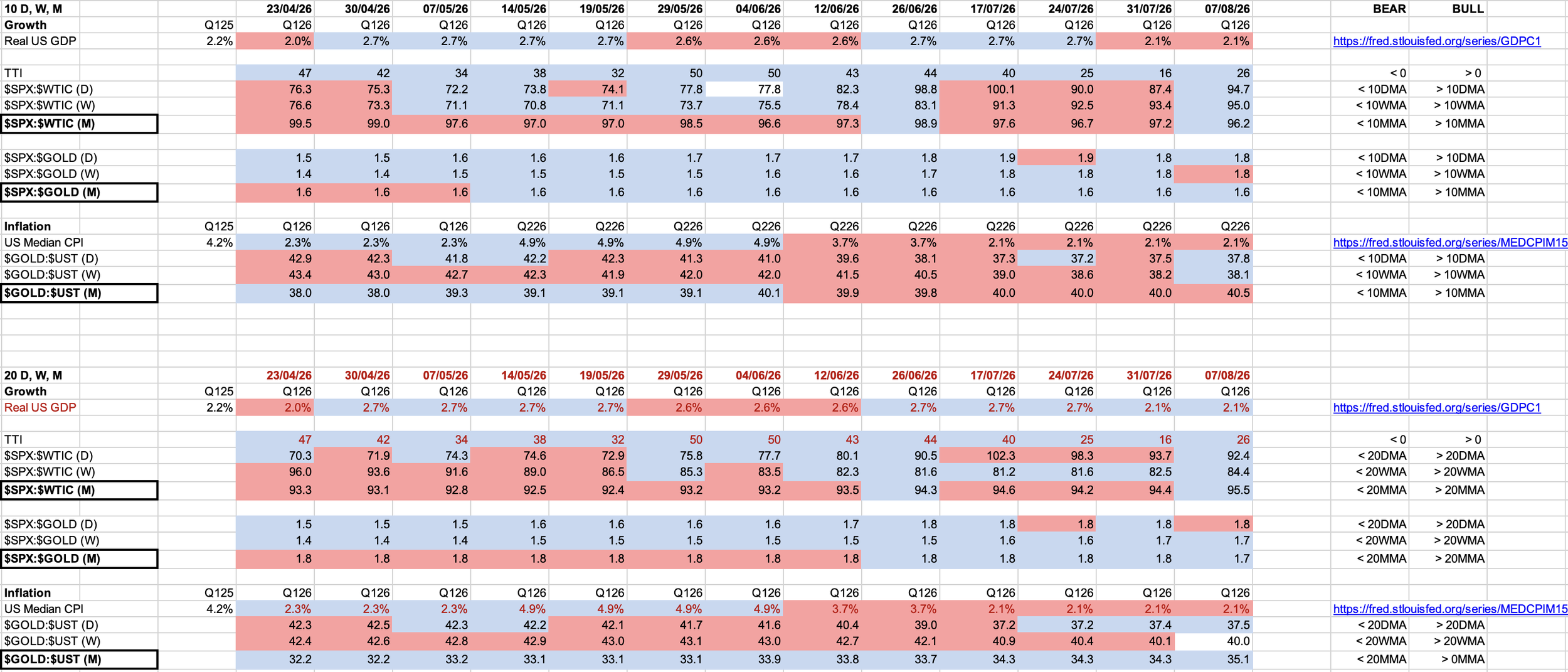
The US economy returned two contradictory verdicts last week. The advance estimate put Q2 real GDP at +1.5% annualised — below consensus, down from +2.1% in Q1, confirming the deceleration the quadrant map has tracked since May. The Atlanta Fed’s first estimate of Q3 growth, published the same morning, opened at 5.0% (now 5.6%). One is a confirmed weak quarter. The other is an unconfirmed strong one. We are positioned for an inflationary boom, relying foremost on our trend model, while waiting for incoming data to confirm the path forward. A 10% allocation to energy equities also provides a hedge in an inflationary bust outcome.
Equities
Our Technical Trend Indicator keeps us on the right side of the market’s primary trend. We look for two consecutive weekly closes above/below trend for a buy/sell signal to take effect. Our active asset allocation strategy invests in a mix of global equities, fixed income, precious metals and cash. Our multi-asset approach has delivered an annual return over the past 10 years +3% per annum better than the average multi-asset fund benchmark Please contact us to learn more about it.
US corporate earnings are posting their strongest growth since 2021. Even when you exclude Alphabet and Amazon, whose earnings are inflated by their equity investments in OpenAI and Anthropic, S+P 500 earnings grew +29% in the second quarter. (68% of Alphabet’s reported Q2 EPS came from unrealised gains on their investments in Anthropic and SpaceX! Anthropic is expected to account for 44% of Google Cloud’s revenues in 2027. OpenAI and Anthropic will account for around 80% of total Amazon Web Services AI revenues in 2026.)
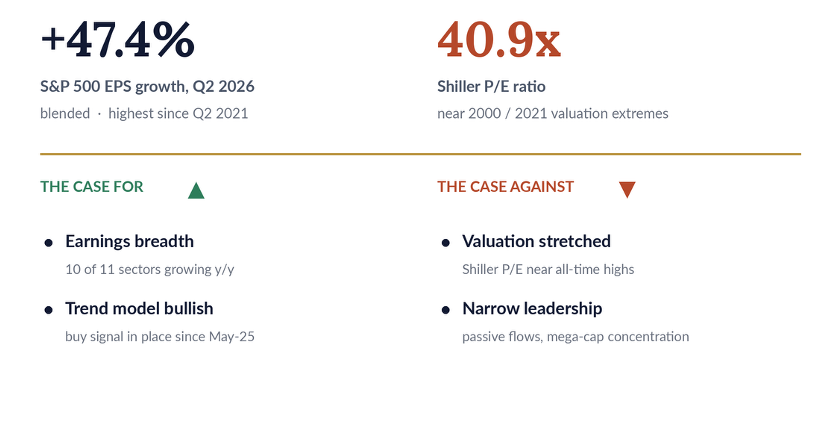
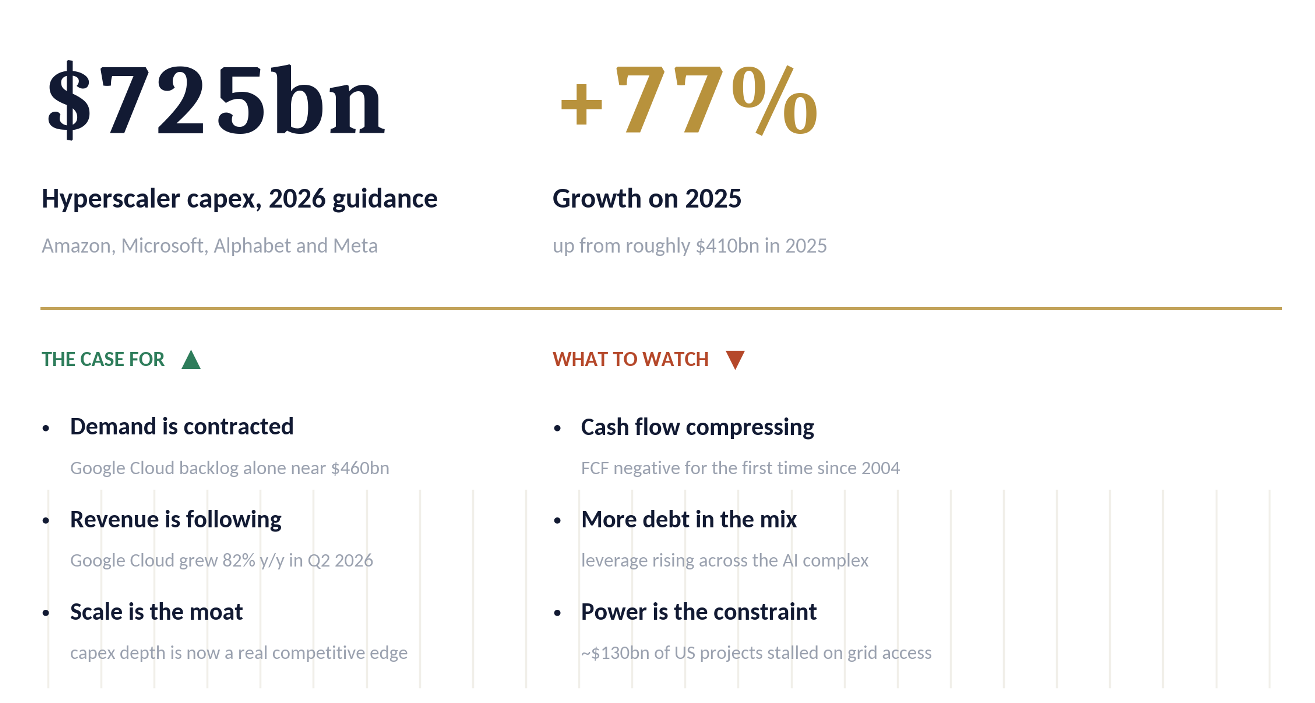
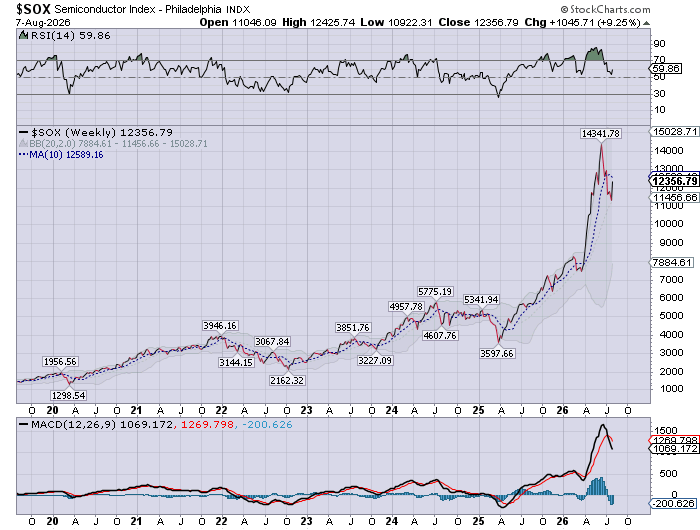
At some point, the stock market will discount all this good news. We may already be there. The semiconductor stocks, for example, made new all-time highs in June, yet, despite all the good corporate news, and hundreds of billions in capital spending plans announced for this year and next, the semiconductor index is -15% below its June highs. The broader market remains healthy, but it is a trend worth paying attention to.
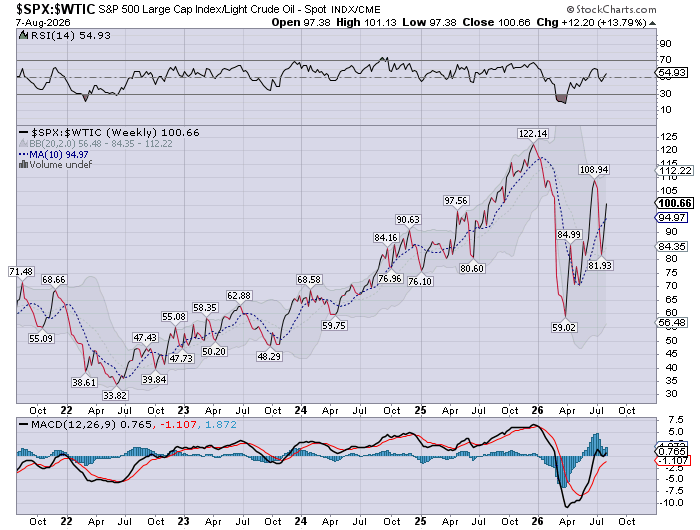
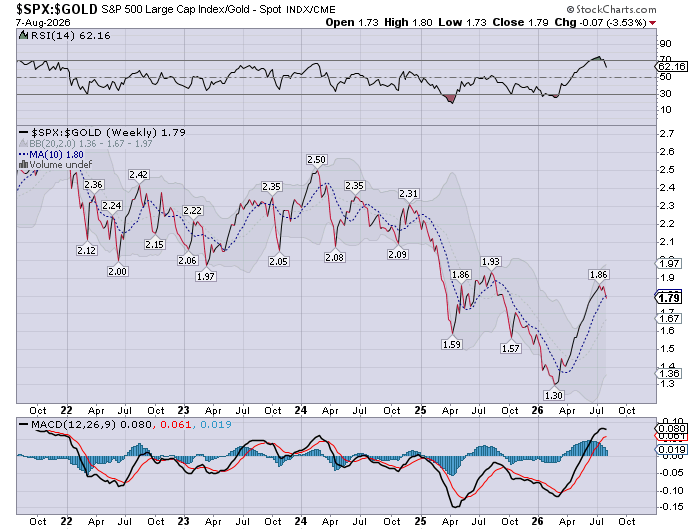
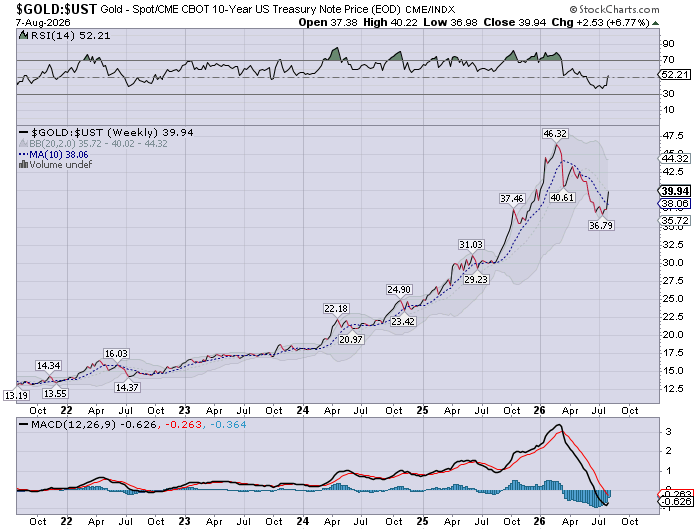
In an inflationary boom, equities outperform energy, gold outperforms US Treasuries, and gold also tends to outperform equities over time. Gold has been declining for the last six months, but that period is ending now. In the graphic below, we show the relative trends for each market that helps us identify the dominant quadrant/regime.
After the sharp decline in equities in January and a doubling of the oil price in a few weeks, US equities have been outperforming energy prices again, since the lows in April, confirming an inflationary boom. The stock market can handle $80 oil. If oil prices push back up into triple digits, the more dangerous inflationary bust regime will come back into play. Energy stocks are an excellent hedge for portfolios given their attractive valuations and diversification benefit. ExxonMobil, despite tripling in price since 2022, trades at just 12 times earnings and pays a 3% dividend yield.
The S&P has outperformed gold since February. Gold experienced a sharp -28% correction from the $5,600 high, after doubling in price over the prior two years. As we will discuss in the Gold section of the report, we are confident the correction in precious metals is now behind us and normal service will resume shortly, namely, gold will return to being the best performing asset on the board.
In an inflationary boom, gold outperforms US Treasuries. That trend is once again returning in gold’s favour.
Bonds
The Federal Reserve, under new chairman Kevin Warsh, held for a fifth consecutive meeting, with three members dissenting in favour of a hike. Warsh wants the market to play a greater role in determining Fed policy. Be careful what you wish for Kevin. In reality, there is little the Fed can do to control long-term interest rates in the US. 30-year bond yields are rising, reflecting an increasingly inflationary environment (inflationary boom) and ultra loose fiscal policy at government level.
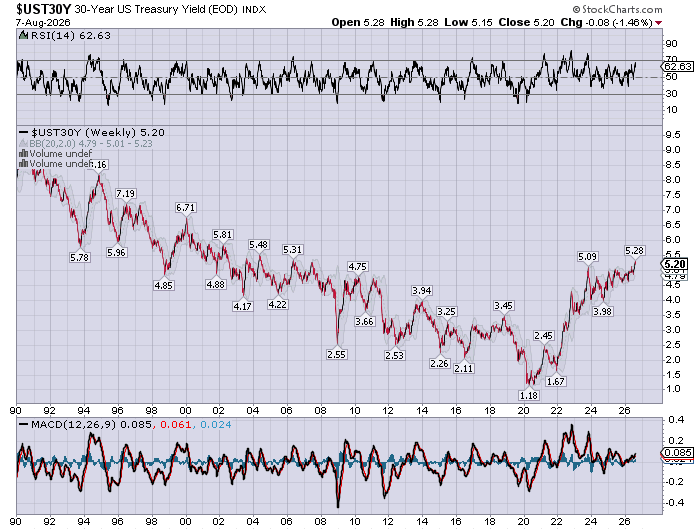
While the US has an ongoing inflationary problem, it pales in comparison to what is happening in Japan. Japan imports 60% of its food and 85% of its energy each year. Japan also has one of the largest government debt burdens in the world. And now, Japan has an inflation problem. The JPY is weak and Japanese bond yields are soaring. 10-year JGB yields doubled in 2024 from 0.5% to 1%. The doubled again in 2025 from 1% to 2%. They are on track to double again in 2026. Japan is the largest holder of US Treasuries in the world at $1.2 trillion. Japan has also been ground zero for the multi-trillion carry trade for decades. Leveraged investors would borrow in JPY at a (formerly) zero yield, use the proceeds to buy USD, and invest in US equities and US Treasuries. As long as there was a spread between US and Japanese rates, and the JPY continued to depreciate versus the USD, this leveraged trade was a huge source of profitability for banks and hedge funds.
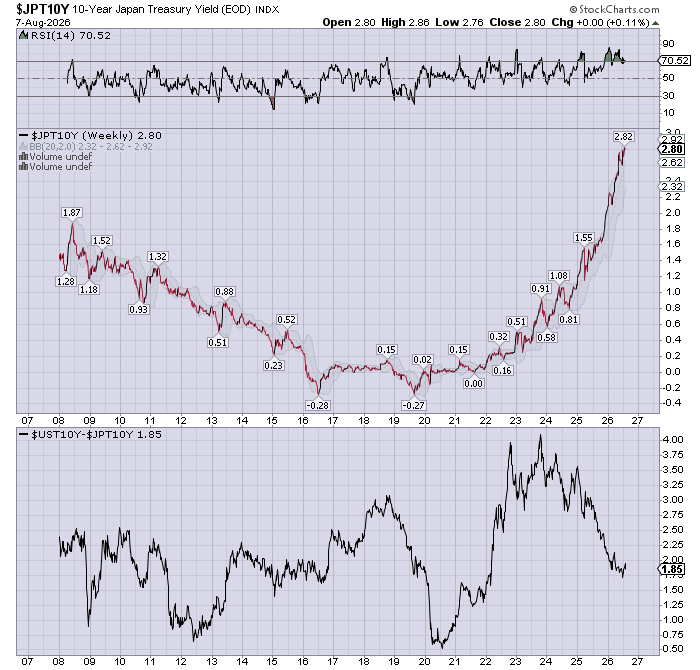
If the JPY starts to appreciate and the spread between Japanese and US government bonds narrows or closes, there will be an epic unwind of the multi-trillion dollar carry trade. We will see a lot more selling of US Treasuries, and (much) higher US bond yields. This is why we are seeing Scott Bessent in the news day after day. He can slow the process, but he cannot stop it, in my opinion.
Gold
You must read ‘A Shifting Global Currency Landscape’ from the folks at GaveKal Research. Louis has unlocked the paywall on this one. Their service is excellent, but expensive. There are many reasons to own gold as I have discussed ad infinitum. Louis does a great job explaining how gold is becoming an increasingly important cog in the monetary plumbing, a trend I expect will continue until price more fairly reflects its true underlying value.
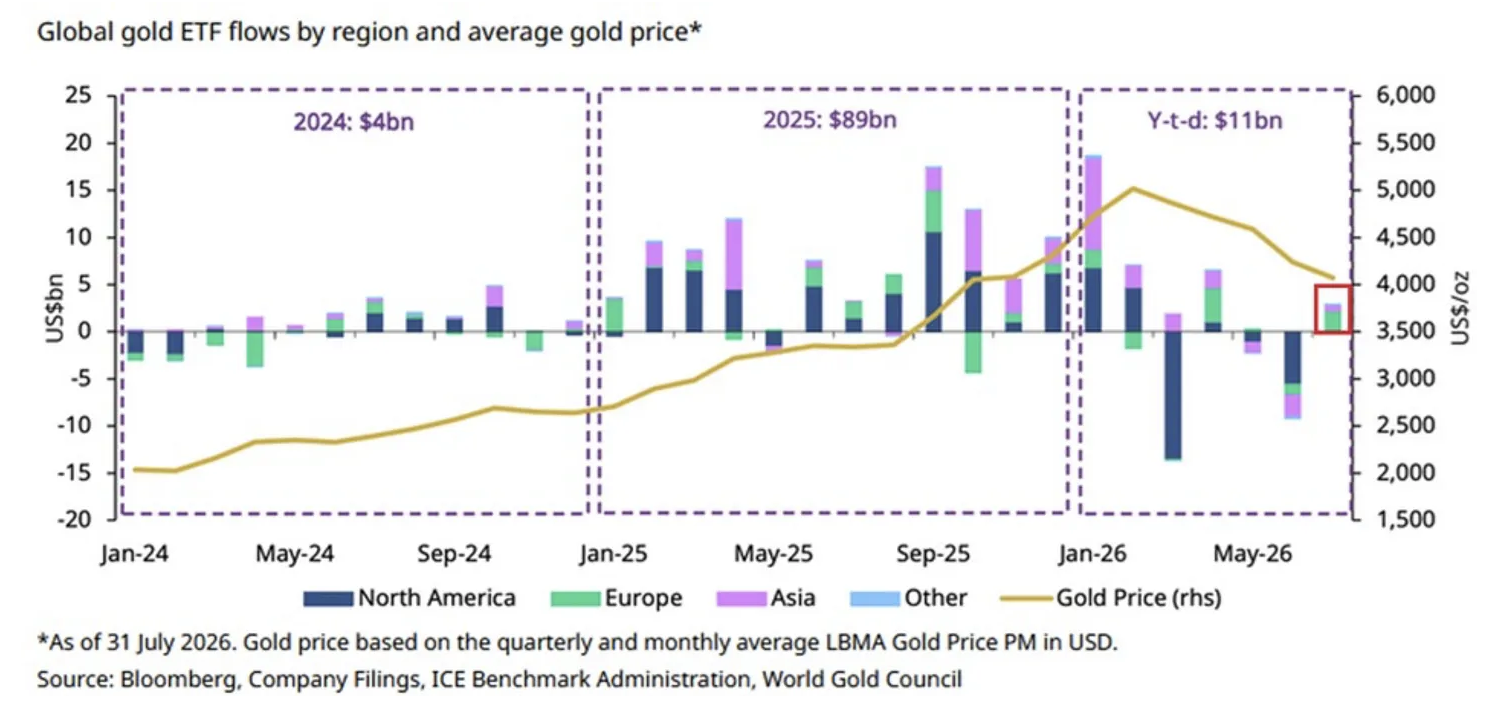
Gold rallied an impressive +35% in euro terms in 2024. The move went largely unnoticed by the investing public. Global gold ETF inflows were a very modest $4 billion that year, reversing a period of net ETF outflows in 2022 and 2023. It took at 45% rally in 2025 to change investor sentiment and trigger a surge in retail buying. According to the World Gold Council, global inflows reached $89 billion last year as gold surged to $5,600. Inevitably, we reached a speculative excess, resulting in a healthy 6-month -28% correction, which has eliminated the bullish narrative.
Central banks stepped up their gold buying in the second quarter, after modest buying in Q1 2026.
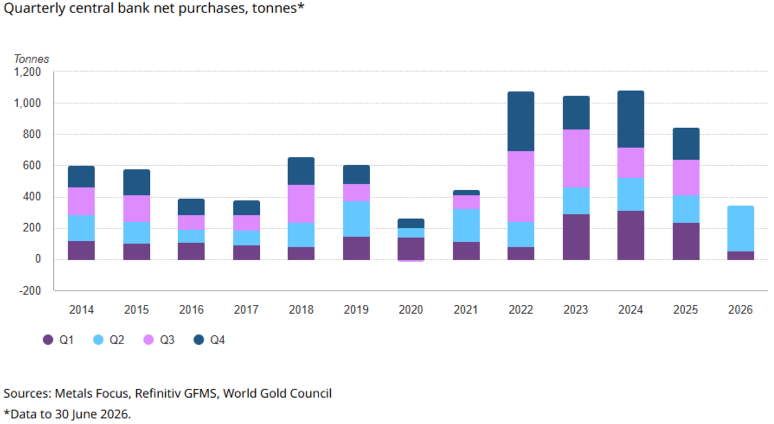
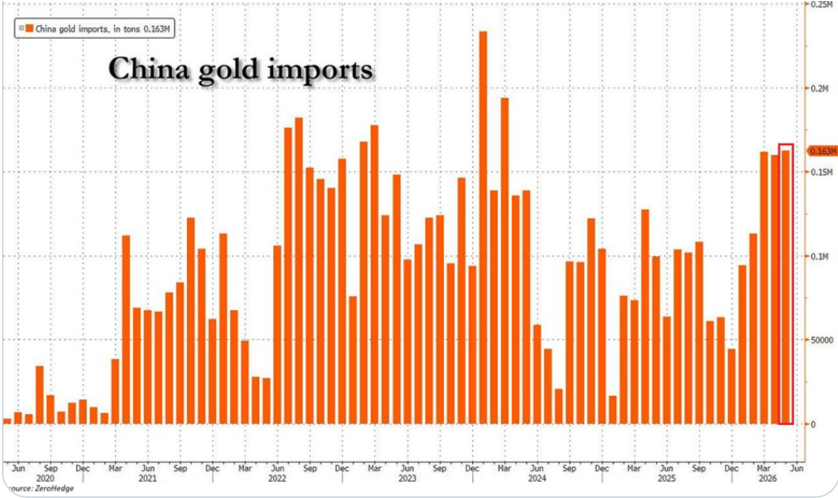
China is a key part of the story and have been increasingly aggressive buyers of gold in recent months.
The market is starting to turn once again in favour of gold relative to the S&P 500. For a more detailed analysis of our current views on precious metals or if you would like to learn more about our service, please get in touch at brian@secureinvestments.ie.
